How to read this monument?
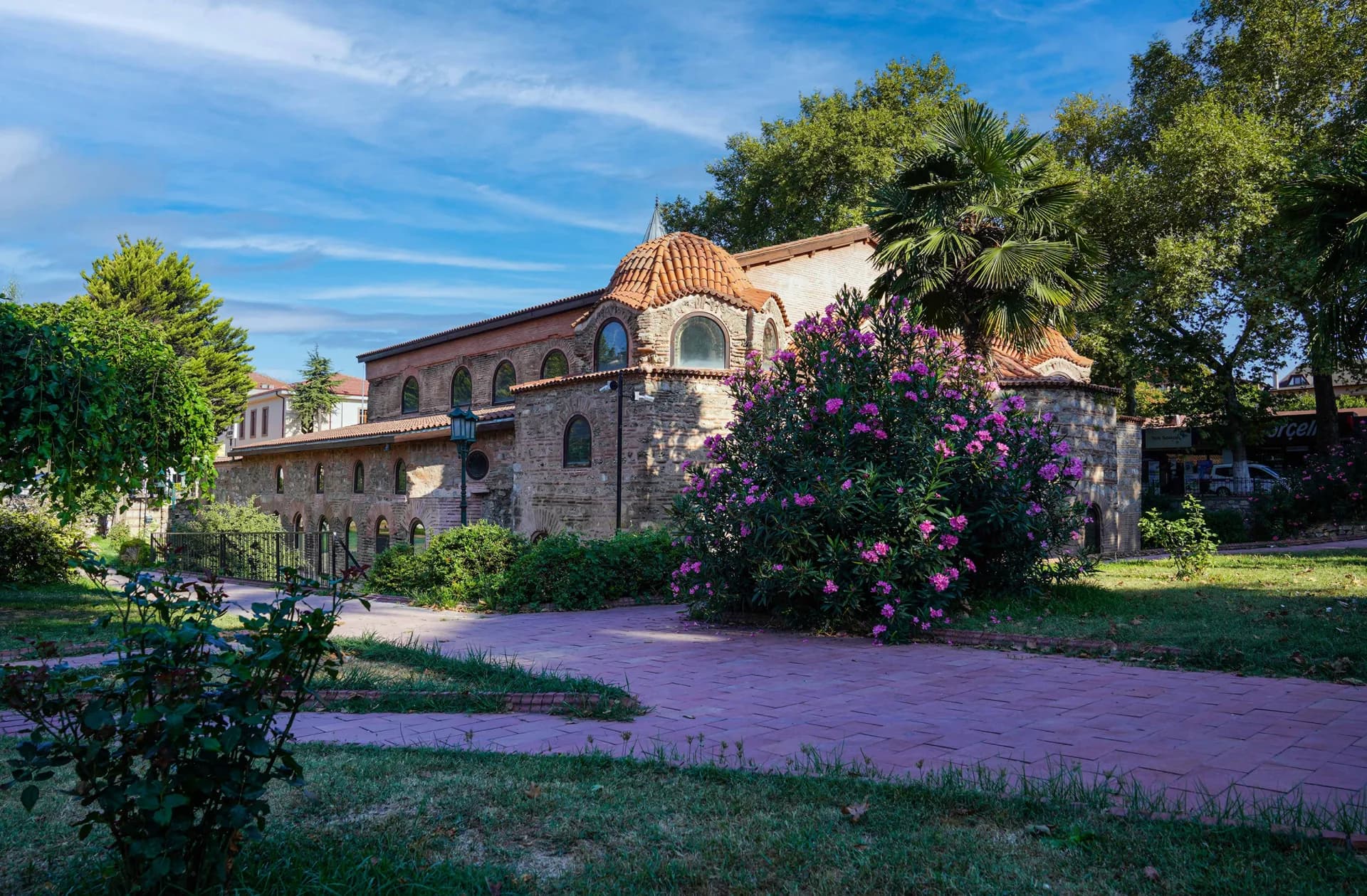
Hagia Sophia is not just a building belonging to a single period, it is the city memory accumulated in the center of Iznik. Rising near the public area in the Roman period, the basilica became the religious center of Byzantium; It was converted into a mosque after 1331 and was repaired during the reign of Mimar Sinan. While visiting the building, it is necessary to read together the traces left by earthquakes and transformations, rather than a perfect monument.
Don't miss
Compare the three-aisled basilica plan and masonry from different periods.
Note the semicircular seating levels reserved for religious officials around the apse.
Traces of frescoes and floor mosaics in the burial chamber make the church period of the building visible.
Its location near the intersection of four major roads is a good start to understanding the grid plan of ancient Nikaia.
historical background
Hagia Sophia, which was built as a basilica since the 4th century AD, was reorganized after earthquakes during the reign of Justinian. The building has a 3-nave narthex layout, representing the architectural blend of the early Byzantine period.
The 7th Ecumenical Council (Second Council of Nicaea), convened in 787 during the reign of Queen Irene, put an end to the discussions on iconoclasm (iconoclasm) and took the decision to release religious depictions under this umbrella.
The building, which was converted into a mosque with the conquest of Iznik by Orhan Gazi in 1331, underwent a major restoration by Mimar Sinan in the 16th century, and a mihrab and pulpit were added.
Today, it welcomes its visitors both as a museum that reveals the historical heritage and as an active place of worship.
Local image archive