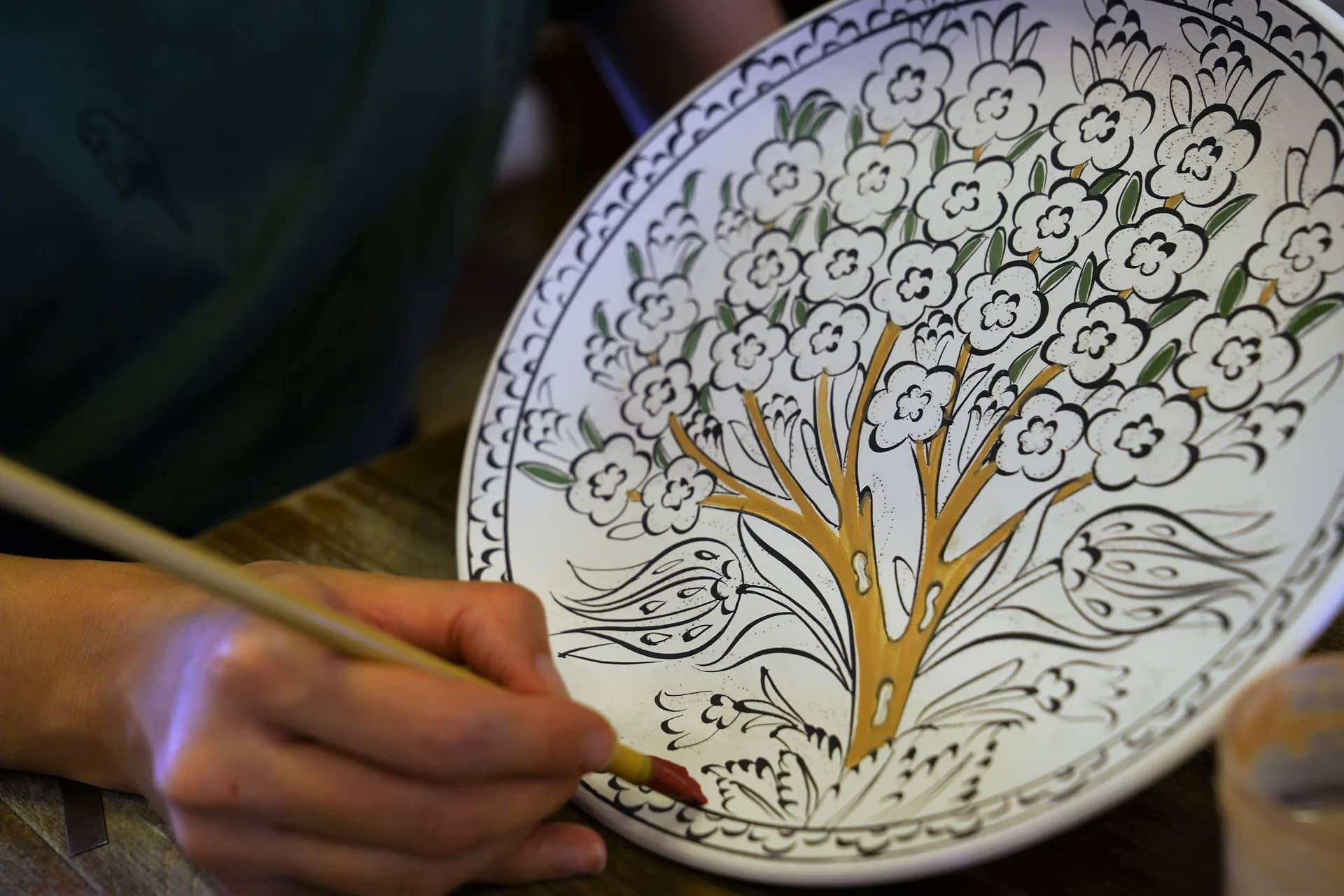
Cobalt &turquoisedance in fire
The living story of Iznik tiles, shaped by a quartz-based body, underglaze painting and kiln knowledge passed on from master to apprentice.
From matter to pattern
Read a tile closely.
quartz body
Light-coloured, hard surface formed by finely ground quartz with clay and glass components.
underglaze pattern
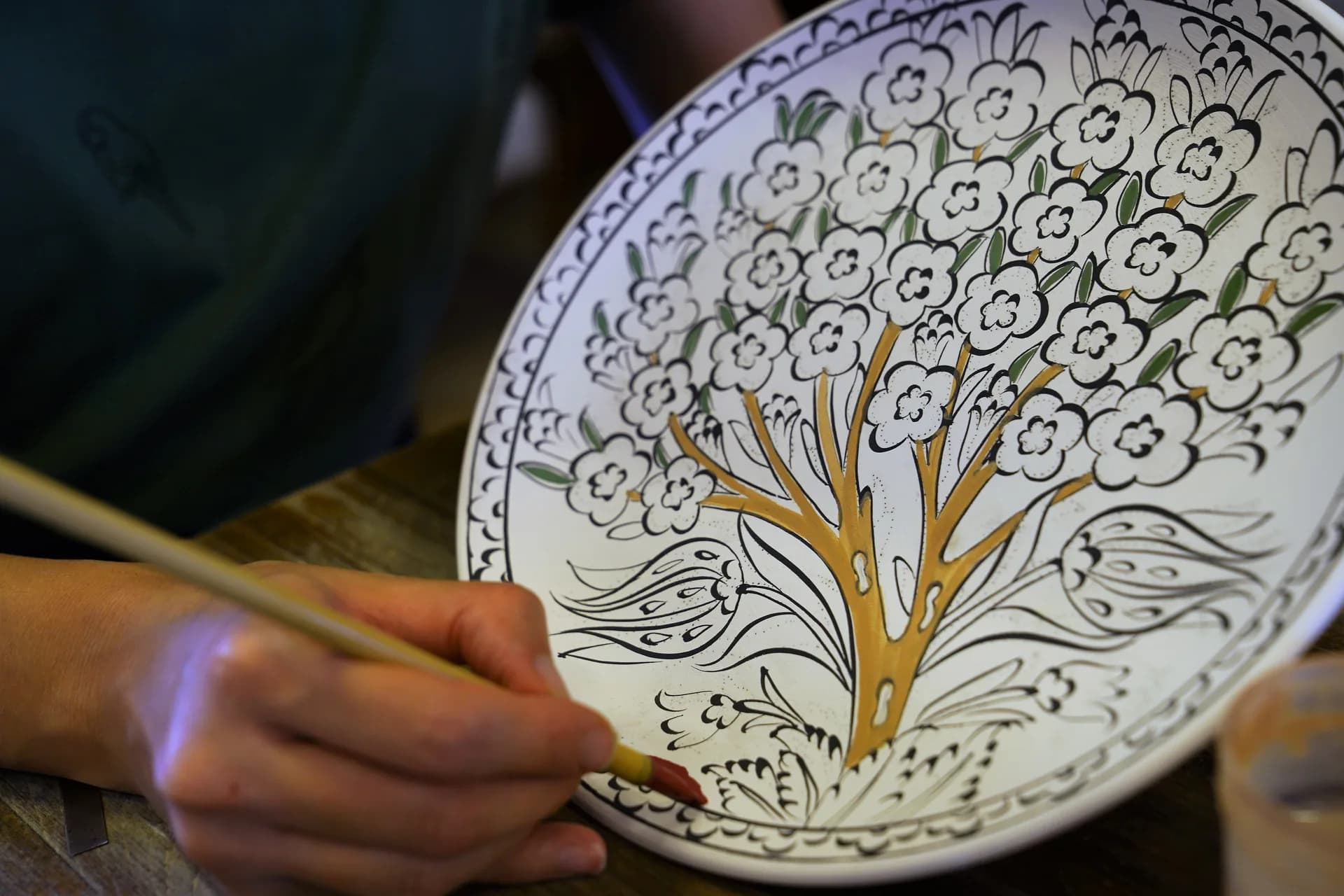
Tahrir lines and colors turn into a single composition under the transparent glaze.
Oven information
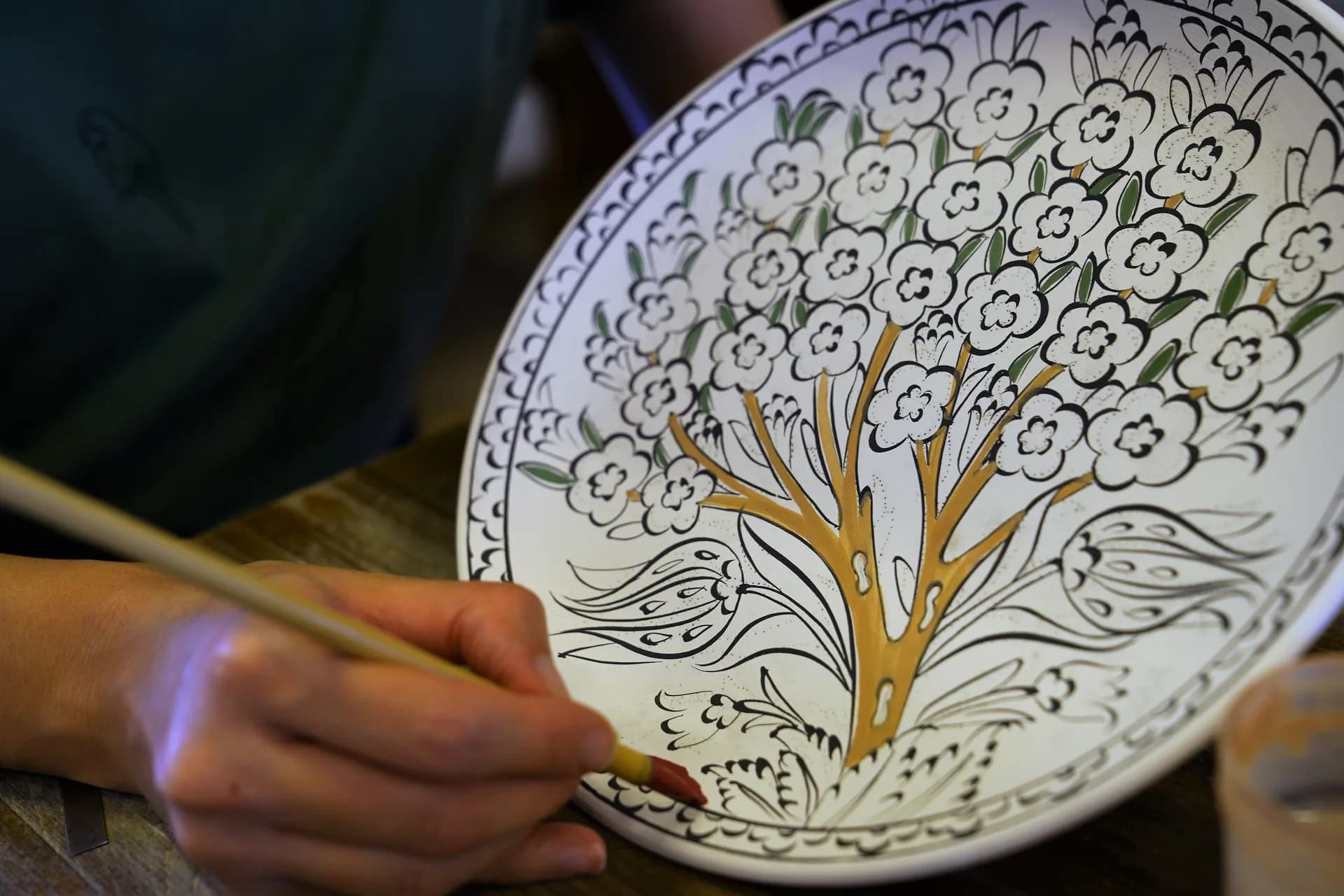
In firing, placement, glaze thickness and the experience of the master determine the result as much as the temperature.
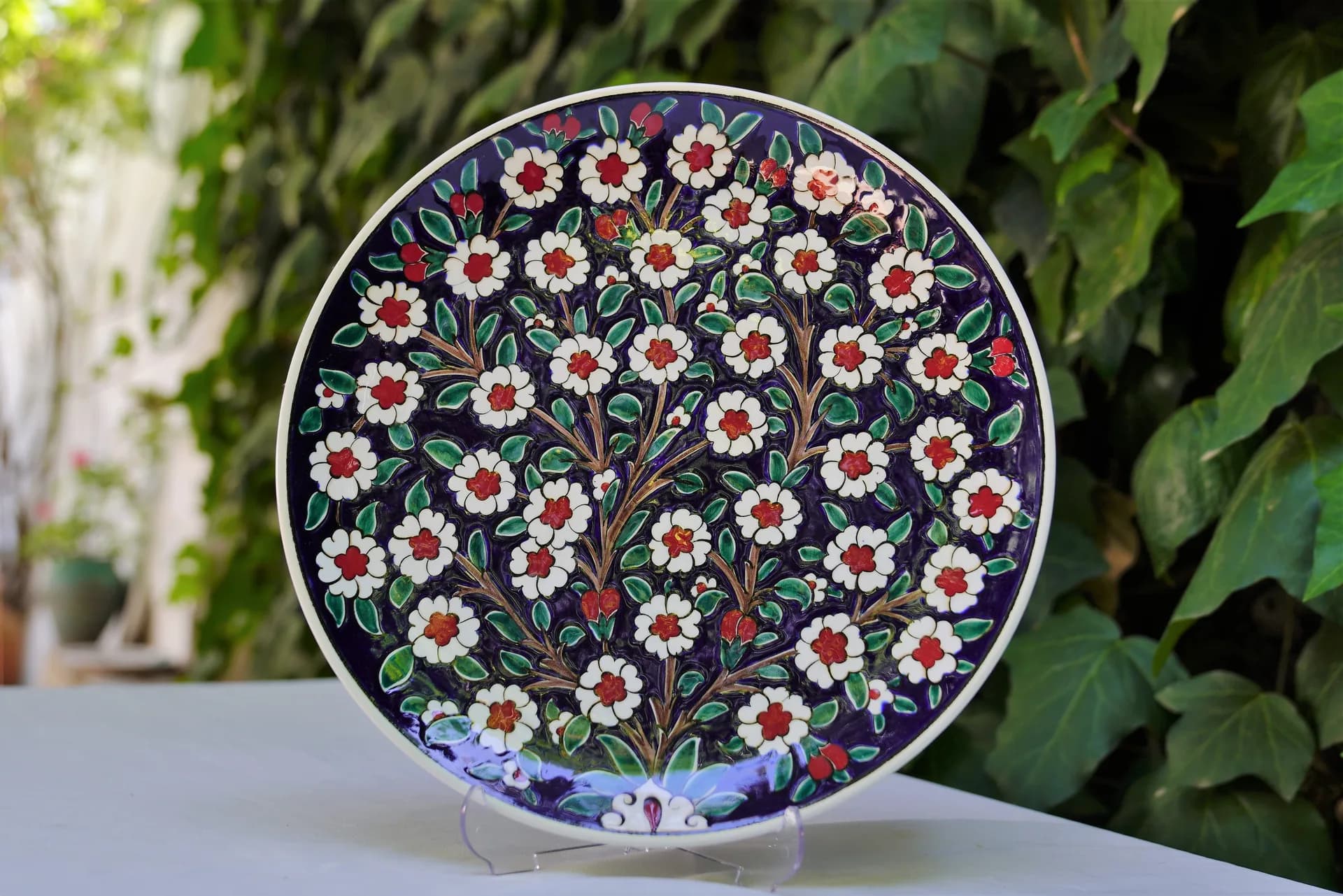
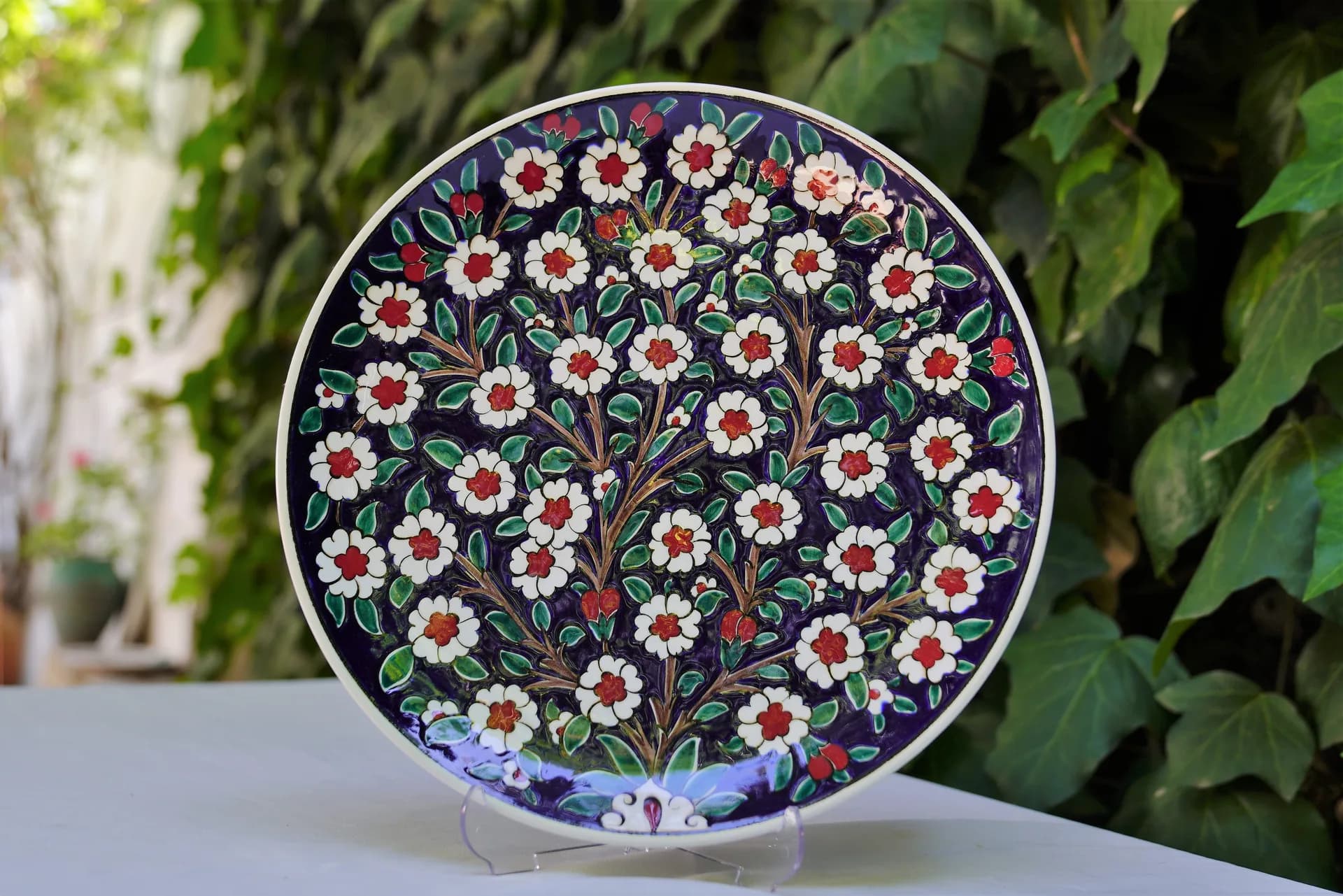
Underglaze colors and floral motif layout
Quartz and fire
magical chemistry
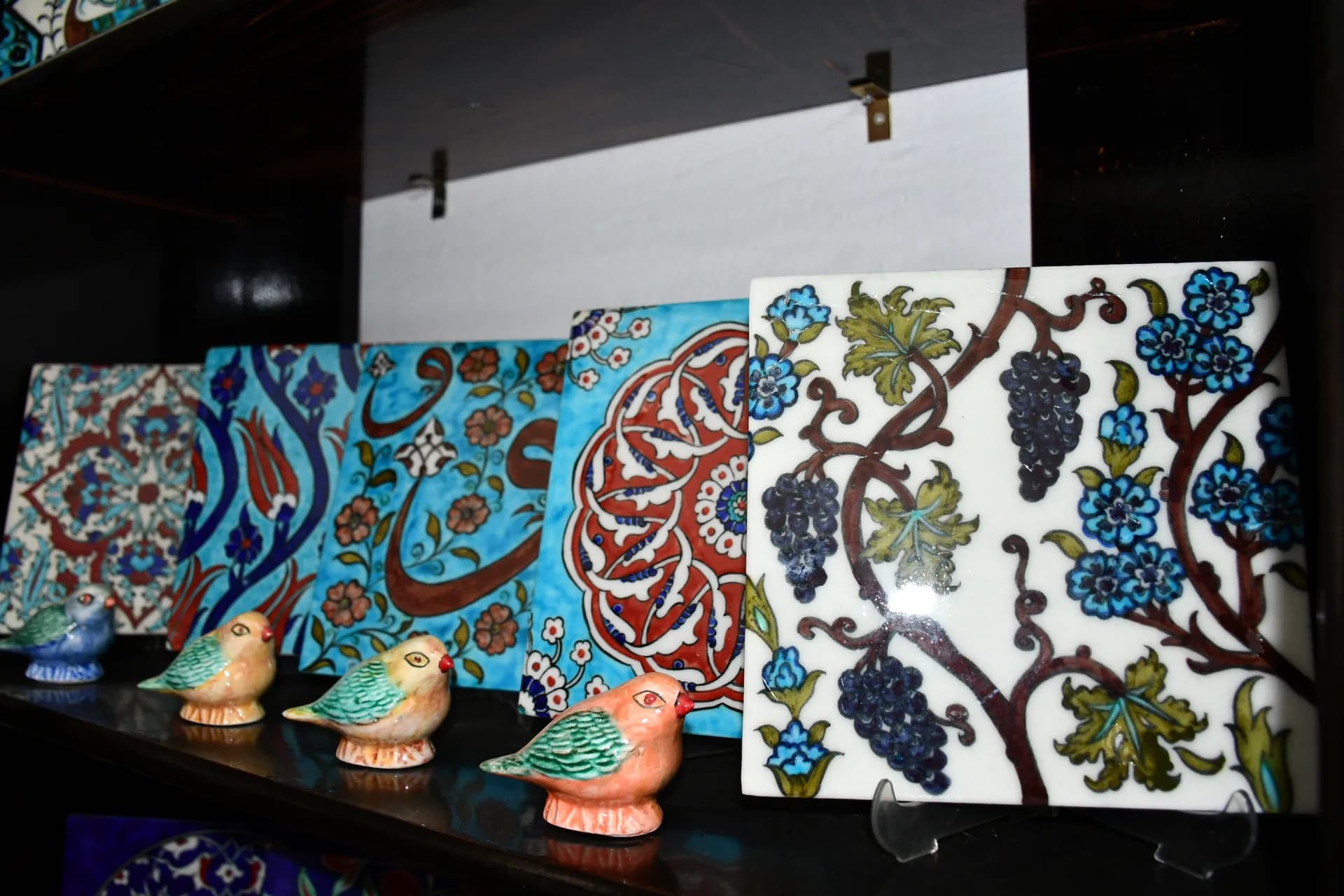
The distinguishing feature of Iznik tiles is the combination of their quartz-rich body and shiny glaze surface. The light background makes colors ranging from cobalt blue to turquoise appear clear.
The pattern is first established with tahrir lines; After the colors are applied to the surface, they are covered with transparent glaze. Balancing the reactions of the body, paint and glaze during firing is the most delicate stage of the craft.
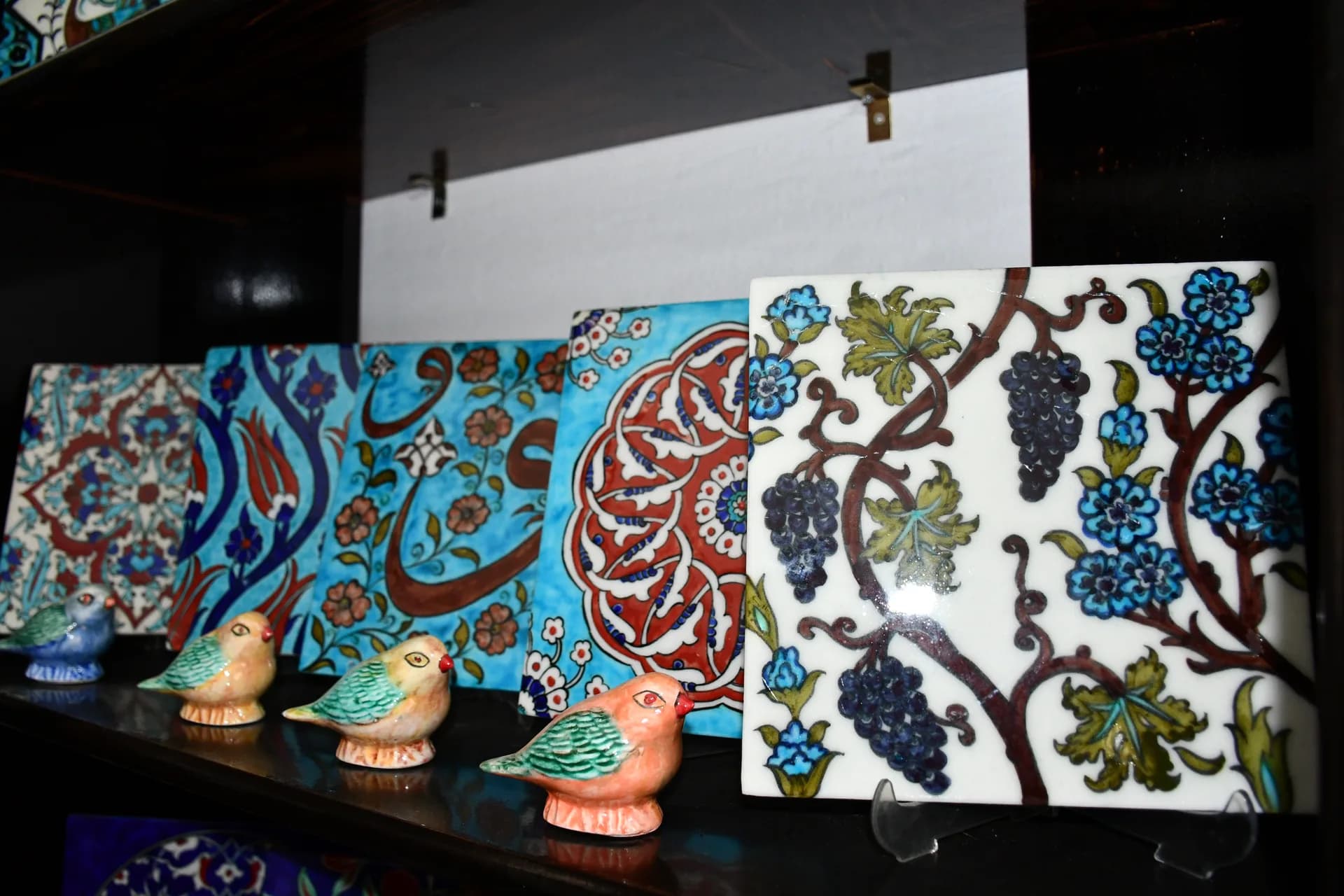
Squares from the tile heritage
Classical Iznik motifs
visual language
Tulip, carnation, rumi and cloud; Rather than being a sign alone, it forms a visual repertoire that establishes rhythm, direction and balance on the surface.
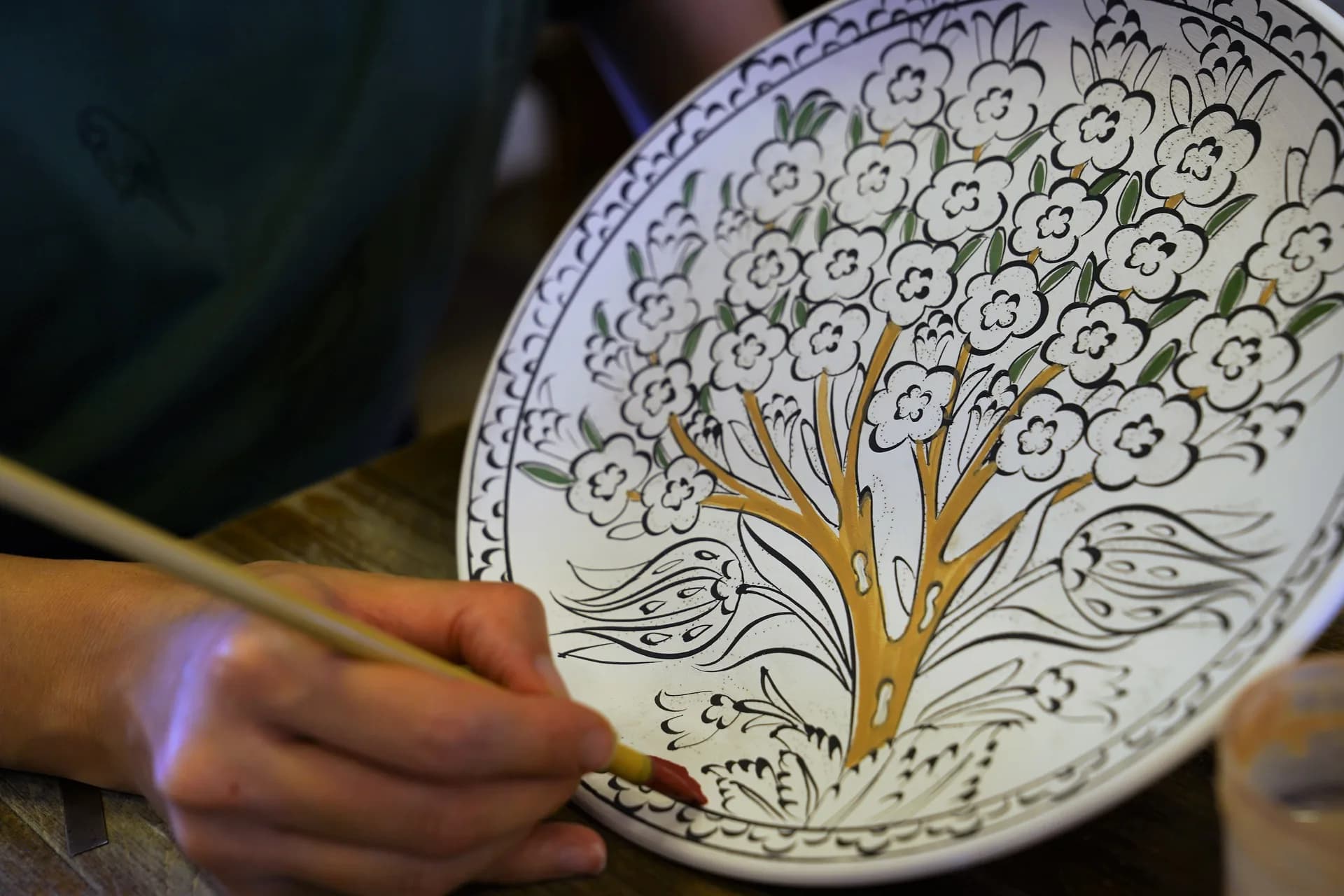
Tulip (Tulip)
It is the central motif of classical Iznik compositions with its elegance and rising singular form.
“It directs the composition with its thin, vertical body; It is used singly or in small groups.”
Tulip (Tulip) motif underglaze application
Palace blooming on fire
flowers
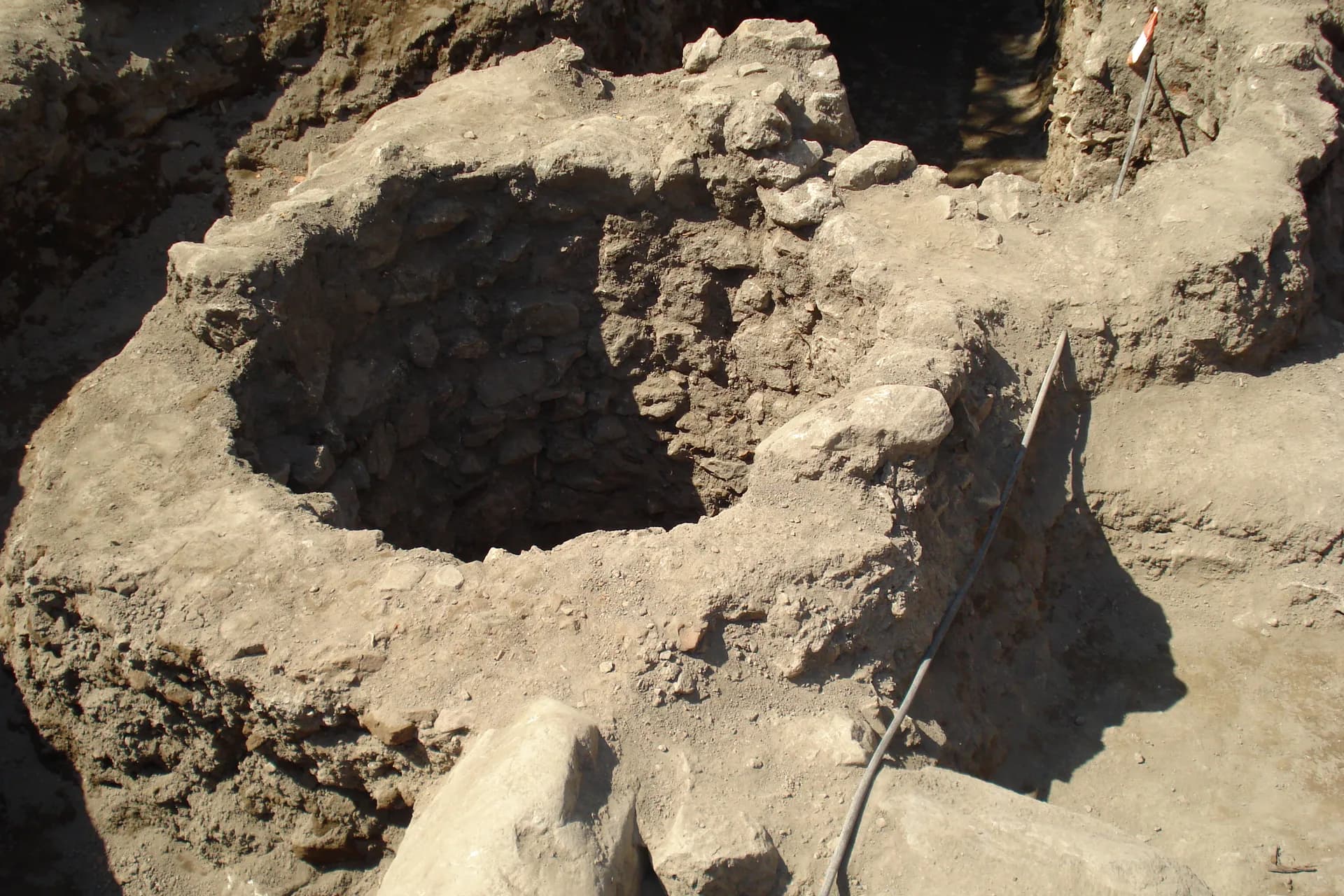
The production world of Iznik tiles, which decorated palaces and large religious buildings during the Ottoman period, is re-read through the oven parts, faulty pots and firing materials found in the excavations around the Nilüfer Hatun Imaret.
Archaeological traces of production
Prof. Dr. Furnace ruins, tripods and production residues found in the excavations led by Oktay Aslanapa; It provides direct evidence of the shaping, glazing and firing processes.
living tile craft
Turkey's traditional tile making craft was included in UNESCO's Intangible Cultural Heritage list in 2016. The workshops in Iznik are an important branch of this broad tradition that continues with production today.
Brick domed kiln chamber and firing chamber
Traditional tile making stages
Quartz Rich Body
Finely ground quartz; It is blended with clay and glass components, shaped and prepared for the first firing.
Tahrir with Coal Powder
Motif lines are scribbled with black paint using perforated pattern papers sprinkled with charcoal powder.
Underglaze Color Application
Cobalt blue, turquoise, green and fluffy coral red pigments are meticulously brushed on.
Transparent Glaze and Baking
The pattern is covered with transparent glaze; Controlled firing brings together the body, color and shiny surface in a single structure.
Reading Iznik tiles in the city
A trace from fire to architecture.
A tile is more than a surface completed in the kiln. Excavation sites, minarets, museum finds and living workshops bring different stages of production together in one city walk.
A brief history of production
14th–15th century
A style takes shape
Early Ottoman ornament develops a new visual language that leads toward white bodies and underglaze production.
16th century
The classical palette opens
Cobalt, turquoise, green and coral red meet tulips, carnations and saz leaves.
Late 17th century
The kilns fall silent
As commissions and production conditions change, Iznik's workshop network gradually dissolves.
1963–today
Excavation and revival
Kiln excavations reveal production traces while new workshops reconnect the craft with daily life.
City tile atlas
See the tiles in place.
Compare finished ornament, archaeological production traces and living craftsmanship at nearby stops.
Open the Tile Route- Explore the place
01 · Early Ottoman (1378-1391)
Yeşil Cami Firuze Minare Çinileri
Iznik Center
With Firuze, green and purple glazed brick, the tile mosaic layout is one of the most legitimacy examples in the Iznik of early Ottoman minaret.
 Explore the place
02 · 15-16. Century Golden Age
İznik Müzesi Fırın ve Seramik Buluntuları
Iznik Archaeological Museum
False bakeries from Chinese furnace excavations, three-foots and ceramic parts make production process visible until finished work.
 Explore the place
03 · Early Ottoman (1442)
Mahmut Çelebi Camii Yivli Çini Kuşakları
Inside Iznik Bazaar
Brick mesh and firuze tiles in the minare body show strong union in the neighborhood scale of architecture rhythm with color.
- Explore the place
04 · From the 14th Century to the Present
Süleyman Paşa Medresesi Çini Çarşısı Mirası
Iznik Stone Evler Location
Workshops working in the dome cells of the early Ottoman medrese live with classic motifs production, training and current design.
Iznik tile markets and workshop guide
Living workshops that can be visited to watch production, select works or participate in hands-on work. Verify working and visiting conditions before you go.
Süleyman Pasha Madrasa, Çiniciler's Bazaar
Working in the domed cells of the early Ottoman madrasah, the workshops offer the opportunity to watch traditional Iznik tile production and choose works directly from the masters. This is not a silent museum, but an active production area.