Structure of Iznik Tile: How Quartz, Color and Glaze Meet?
The story of the quartz-rich body, tahrir lines, underglaze colors and controlled firing coming together on the same surface.
The production that developed in Iznik workshops in the 15th and 16th centuries created a wide repertoire ranging from architectural coverings to plates and oil lamps. The bright white background and clear colors are not due to a single secret formula; It arises from the joint management of body, paint, glaze and kiln knowledge.
Transformation of Hard Stone into Glaze
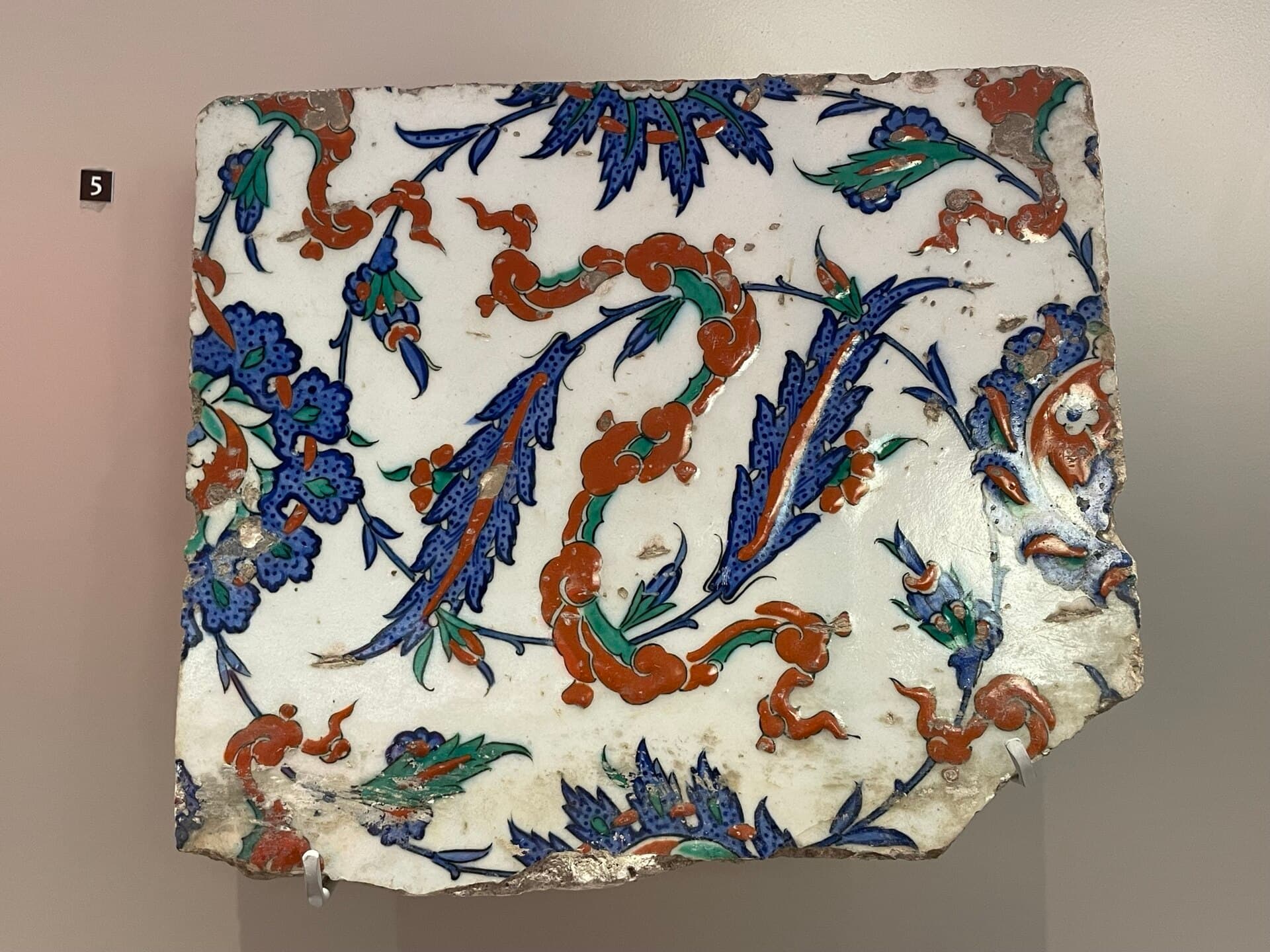
The body of Iznik tiles is rich in quartz; Clay and glass components help shape this hard material and bind it in firing. The light colored body makes the cobalt, turquoise and green tones under the glaze appear clean.
Production residues and faulty parts in excavations indicate that success depends not only on the recipe; It shows that it depends on the preparation of the dough, the thickness of the glaze, the placement in the oven and the experience of the master.
Coral Red and Cobalt Blue
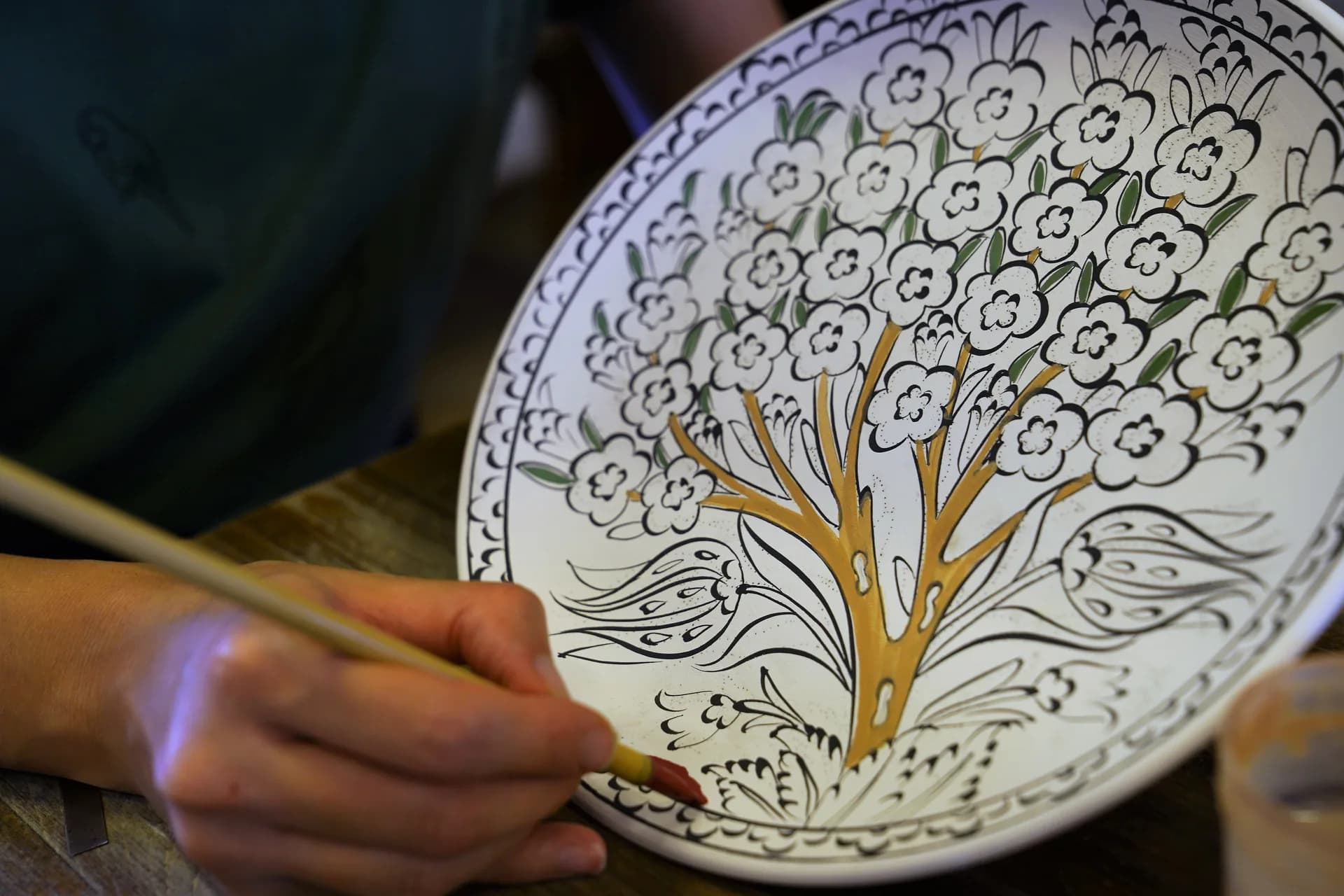
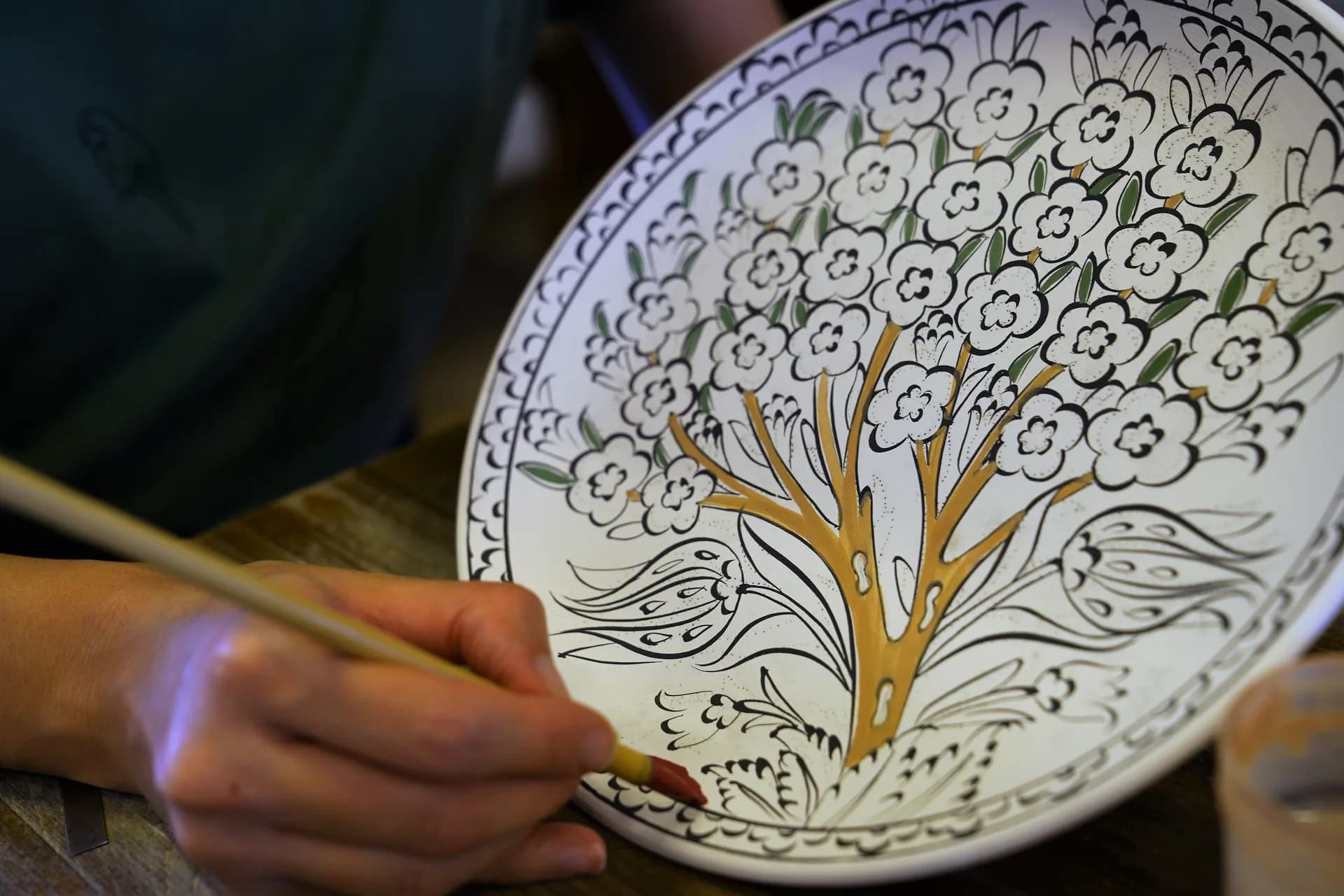
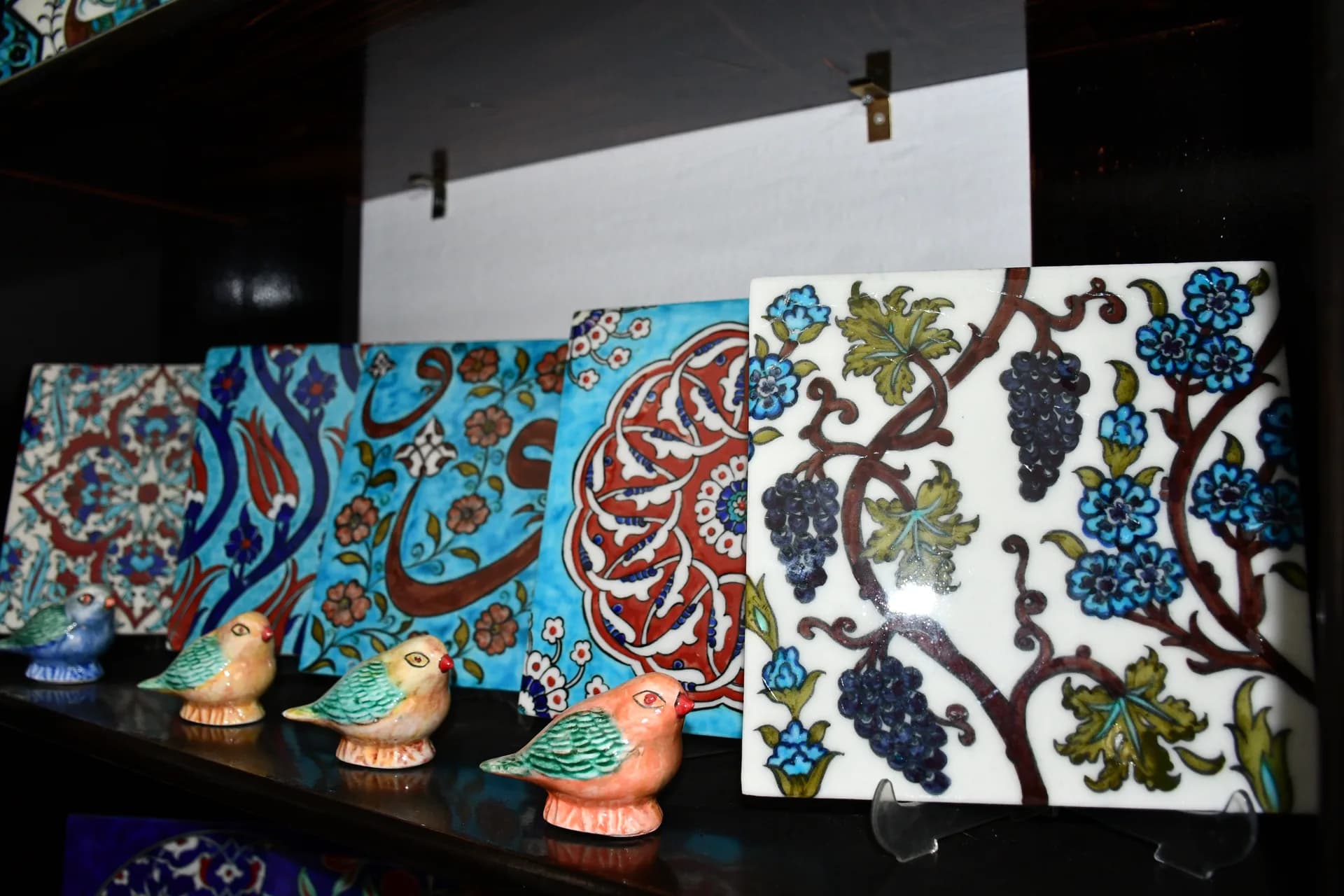
Fluffy red, which became prominent in the second half of the 16th century, is one of the most recognizable elements of the classical Iznik palette. Tahrir lines establish the boundaries of the pattern; colors gain brightness and depth under the transparent glaze.
In today's workshops, while the historical repertoire is maintained, new forms are also tried. For this reason, it is necessary to read a contemporary product not directly as a 16th century work, but as today's interpretation of a living tradition.
Continue reading